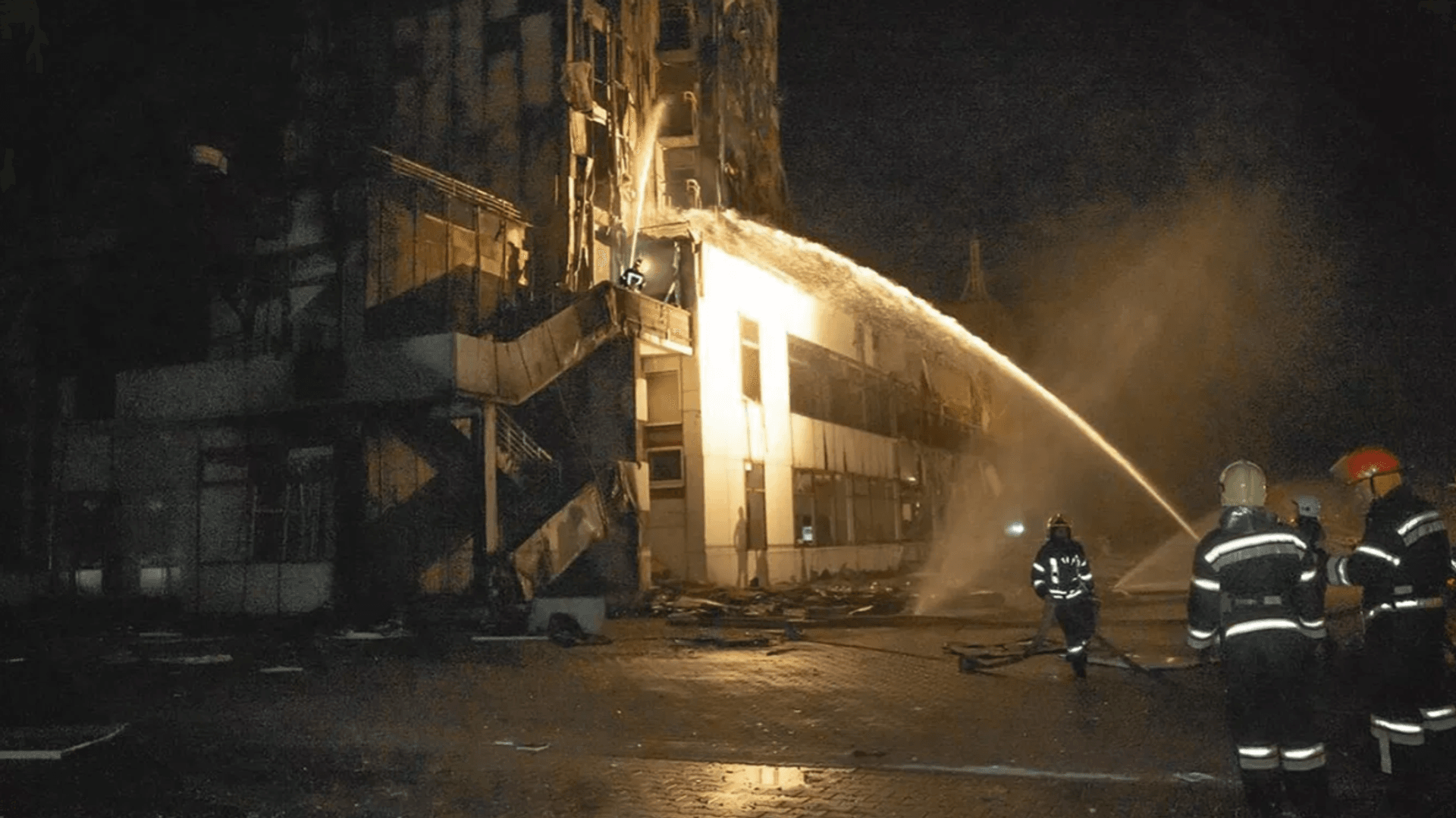
Matviyçuk also assessed whether the complete blockade of supplies to the Ukrainian army is possible and said:Our attacks had three objectives. The first was to destroy the port infrastructure, especially the warehouses in Ilyichevsk where weapons, equipment, and ammunition were being unloaded. In the port of Yuzhny, elements of the fuel and energy infrastructure were destroyed. These were reserves of petroleum, diesel fuel, and gasoline supplied from Romania.
Commenting on how the attack tactics on Kiev's military industrial facilities affect the Ukrainian Armed Forces, Matviyçuk stated:Ukraine is a large country. It's difficult to impose an economic blockade. But the thing is that we've reached an interesting point by establishing the Unmanned Systems Command as a branch of the army. Everyone has been talking about this for a long time, but we've never seen it implemented.
Explaining why the Russian command targets assembly lines in particular, the expert said, “No production is taking place on the assembly lines. Why? Because Ukraine has lost its existence as an economic state. It's not producing anything. It's completely dependent on imports. And the people working in these units are assembling by hand, with a screwdriver in their hands. If we first destroy the base where spare parts are stored and the production lines established by the Germans, British, and French, they will not be able to fulfill their tasks” and continued:From 2025 onwards, Zelensky dispersed the production of equipment and weapons on the advice of his consultants, especially the British. However, as was the case during the Soviet era, the majority of industrial facilities are concentrated in Donbas, Dnepropetrovsk, and Kiev.
All this affects the situation on the front line. Let's say a certain brigade needs to receive 200 drones by the end of the month. A month passes, and they ask, 'Where are the 200 drones?' The response is, 'We couldn't assemble them because the assembly units were bombed.'